


Can You Drive After a DUI Suspension in Denver?
Yes. In Colorado, most drivers suspended after a DUI can apply for a restricted license, also called a red license, through the Colorado Division of Motor Vehicles. This allows you to drive to work, school, medical appointments, and other approved destinations while your full license is suspended. You will likely be required to install an ignition interlock device on your vehicle.
The process involves meeting specific eligibility requirements, submitting paperwork to the DMV, and paying applicable fees. The timeline and requirements vary based on whether it is a first or repeat offense and whether you refused chemical testing. Working with a Denver DUI defense lawyer can help you navigate this process correctly and avoid costly mistakes.
About the Law Offices of Steven J. Pisani
The Law Offices of Steven J. Pisani is a Denver-based criminal defense firm focused on DUI cases and related charges across Colorado. Our attorneys have represented clients throughout the Denver metro area and understand how Colorado DUI laws affect real people, their jobs, and their families.
We approach each case with a direct strategy built on the specific facts at hand. Our goal is to protect your rights at every stage, including during license suspension proceedings.
What Is a Restricted License in Colorado?
A restricted license allows a suspended driver to continue driving under specific, limited conditions. In Colorado, this is formally called a red license because of the red color printed on the card.
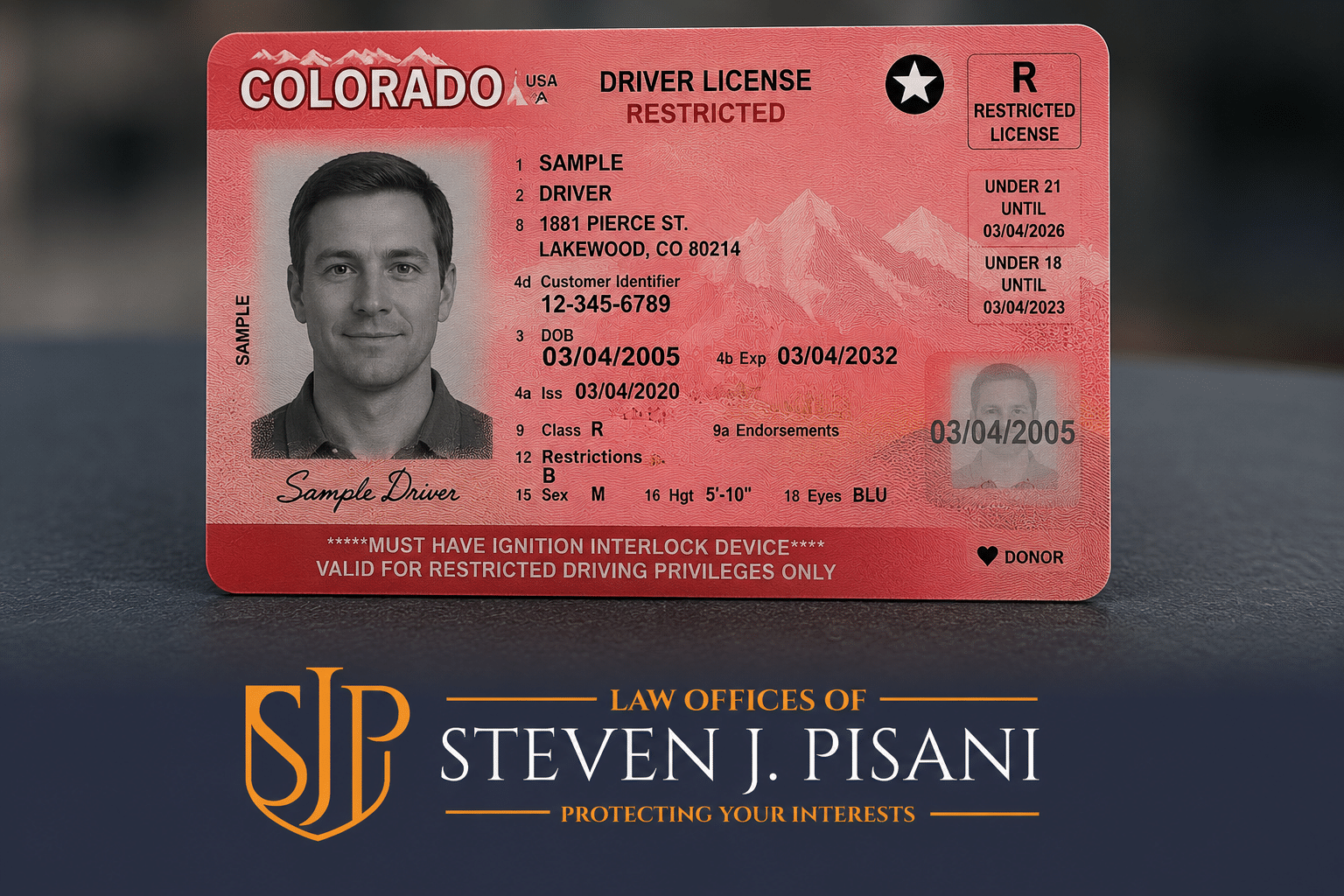
This license does not restore full driving privileges. It permits driving only for approved purposes and requires the installation of an ignition interlock device in any vehicle you operate.
Colorado law gives most DUI offenders access to this option rather than requiring a complete suspension without any driving privileges. However, the process is not automatic. You must apply, qualify, and comply with all program requirements.
Who Qualifies for a Restricted License After a DUI in Colorado?
Eligibility depends on several factors. The type of offense, your prior record, and how your case resolved all matter.
General eligibility criteria include:
- You hold a Colorado driver’s license
- Your suspension resulted from a DUI, DWAI, or DUI per se conviction, or a DMV administrative action
- You have served any mandatory waiting period required before applying
- You have not been convicted of vehicular homicide or vehicular assault involving alcohol or drugs
Drivers who refuse chemical testing face a longer mandatory suspension period before becoming eligible. This is one reason why the decision to refuse a breathalyzer carries serious consequences beyond the immediate arrest.
If you have prior DUI convictions on your record, the waiting periods and requirements become more restrictive.
The Restricted License Process: Step by Step
The process involves both the DMV and, in many cases, the court system. Understanding each step helps you avoid delays.
Step 1: Serve the Mandatory Waiting Period
Colorado law requires most first-time DUI offenders to serve a mandatory one-month hard suspension before applying for a restricted license. During this period, you cannot drive at all.
If you refuse chemical testing, the mandatory period is longer. Repeat offenders face extended waiting periods as well.
Step 2: Choose a DMV-Approved Ignition Interlock Provider
Before your application is processed, you must select a state-approved ignition interlock device provider and have the device installed in your vehicle. The device requires you to pass a breath test before your vehicle will start.
Colorado maintains a list of approved interlock vendors. Costs for installation and monthly monitoring fees are your responsibility.
Step 3: Obtain SR-22 Insurance
You must obtain an SR-22 certificate from your auto insurance provider. This is a form that verifies you carry the minimum required liability coverage. Not all insurance companies offer SR-22 filings. Expect your insurance rates to increase significantly.
Step 4: Submit Your Application to the DMV
Once you have completed the waiting period, installed the interlock device, and secured SR-22 insurance, you can submit your restricted license application to the Colorado DMV. This includes paying the required reinstatement fees.
Step 5: Maintain Compliance Throughout the Restriction Period
After receiving your restricted license, you must maintain strict compliance. Any interlock violations, additional offenses, or lapses in insurance coverage can result in immediate revocation of your restricted privileges.
Colorado DUI Restricted License: Key Facts at a Glance
| Factor | First Offense | Second Offense | Test Refusal |
| Mandatory Hard Suspension | 1 month | 1 year | 2 years |
| Ignition Interlock Required | Yes | Yes | Yes |
| SR-22 Required | Yes | Yes | Yes |
| Restriction Period | 8 months | 2 years | 2 years |
| Early Reinstatement Option | Sometimes | Limited | No |
These figures reflect general Colorado DMV guidelines. Individual cases may vary based on specific circumstances and legal history.
The DMV Hearing: A Step Many People Miss
When you are arrested for DUI in Colorado, two separate proceedings begin. One is the criminal case in court. The other is a civil administrative action by the DMV.
The DMV has the authority to suspend your license independently of what happens in court. You have only seven days from the date of your arrest to request a DMV hearing. If you miss this window, the suspension becomes automatic.
Requesting a hearing does not guarantee you will keep your license. But it gives you the opportunity to challenge the suspension and potentially delay it while your case is pending. Our attorneys represent clients in both criminal DUI proceedings and DMV administrative hearings.
How a DUI Attorney Can Help With Your License
The restricted license process involves multiple agencies, strict deadlines, and documentation requirements. An error at any stage can delay your application or result in a denial.
A Denver criminal DUI attorney can review your eligibility, identify the fastest lawful path to restricted driving privileges, represent you at your DMV hearing, and ensure all paperwork is submitted correctly and on time.
If your charges are reduced or dismissed as part of your defense strategy, it may also affect the type and length of your license suspension. The criminal and administrative processes are separate, but the outcome of one can influence the other.
Speak With a Denver DUI Defense Lawyer Today
If your license has been suspended following a DUI arrest, time matters. The seven-day window to request a DMV hearing passes quickly. Waiting too long can cost you driving privileges that might otherwise be preserved.
Our team includes experienced Denver, CO DUI lawyers who handle both the criminal and administrative sides of DUI cases. Whether you need help challenging a suspension or navigating the restricted license application process, we are ready to assist.
Contact the Law Offices of Steven J. Pisani to schedule a consultation. We represent clients throughout Denver and the surrounding Colorado communities.
Frequently Asked Questions
How Long Do I Have to Wait Before I Can Get a Restricted License After a DUI in Colorado?
For a first-offense DUI conviction, Colorado law requires a one-month hard suspension before you can apply for a restricted license. If you refuse chemical testing, the mandatory waiting period is longer. Repeat offenders face waiting periods of up to one year before becoming eligible. The exact timeline depends on your specific situation, prior record, and how your case is resolved.
Do I Have to Install an Ignition Interlock Device to Get a Restricted License?
Yes. An ignition interlock device is required for all drivers who receive a restricted license after a DUI suspension in Colorado. You must select a state-approved vendor, have the device professionally installed, and pay for monthly monitoring. The device prevents your vehicle from starting if you fail a breath test.
Can I Get a Restricted License If I Refused a Breath or Blood Test?
Yes, but the requirements are stricter. A test refusal triggers a longer mandatory hard suspension under Colorado’s express consent law. After serving that period, you can apply for a restricted license, but the restriction period will also be longer than it would be for a standard DUI conviction. An attorney can help you understand how your refusal affects your specific eligibility.
What Happens If I Drive Without a Valid License During My Suspension?
Driving on a suspended license in Colorado is a criminal offense. A conviction can result in additional criminal charges, fines, extended suspension periods, and potential jail time. It can also seriously damage your position in your pending DUI case. Do not drive until you have received your restricted or reinstated license from the DMV.
Does Winning My Criminal Case Restore My License Automatically?
Not necessarily. The DMV suspension is a separate civil process from the criminal case. A not guilty verdict or a dismissed charge does not automatically undo an administrative suspension. However, the outcome of your criminal case may affect certain aspects of your suspension. Your attorney can advise you on how the two processes interact in your specific situation.
How Much Does It Cost to Get a Restricted License in Colorado After a DUI?
Costs vary and include DMV reinstatement fees, ignition interlock installation and monitoring fees, SR-22 insurance premiums, and any attorney fees. Reinstatement fees alone can range from a few hundred dollars upward. The ignition interlock device typically costs between $70 and $150 per month for monitoring. These costs are in addition to any fines and penalties imposed by the court.